AI-buildability score: how much of a build AI can do
AI-buildability is Afterware's 1 to 5 estimate of how far someone could get on a hardware build using AI coding tools like Claude, ChatGPT or Cursor. A 5 means the hard part is software on off-the-shelf boards, which AI handles well. A 1 means the hard part is physical skill, such as custom circuit boards or fabrication, that AI can't do for you.
The scale
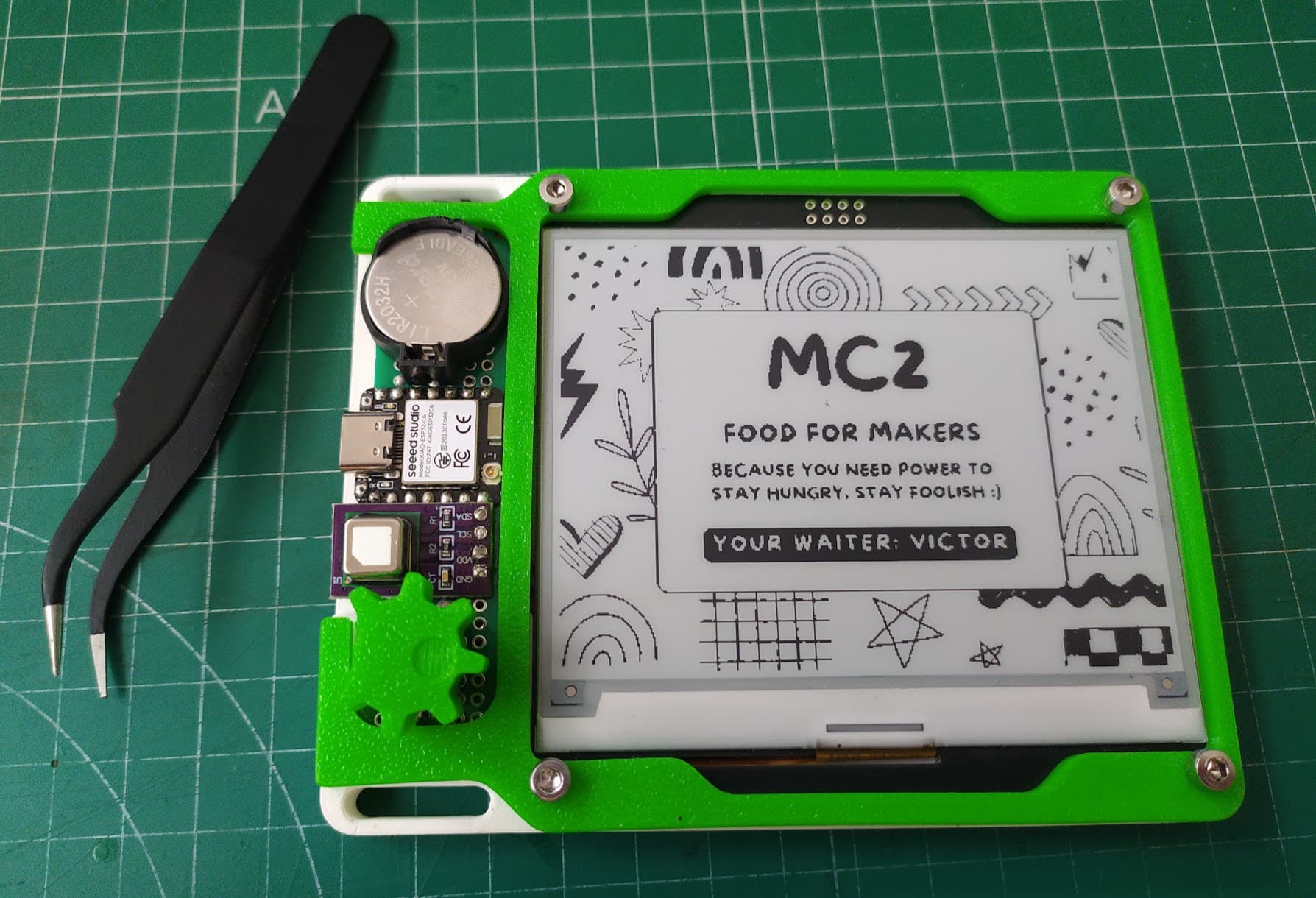
- 5 — AI can do most of it. Almost all of the difficulty is software, on boards and modules you can buy. Example: an e-ink weather display on an ESP32 with a built-in screen.
- 4 — Mostly software. Light wiring, a few modules, maybe a printed or bought enclosure. Example: a macro pad with a knob and a handful of buttons.
- 3 — A real mix. About half the work is code and half is hands-on: soldering, fitting parts into a case, careful disassembly of an old device.
- 2 — Mostly physical skill. Fabrication, analog circuits, mechanical design or delicate repair work, with code as the smaller part.
- 1 — AI can't help much. Custom circuit board layout, machining, or craft and art work where the hard part is your hands.
How a score is set
Each score starts as an estimate written from the maker's own write-up: the parts they used, what they built by hand, and what the code does. An editor checks it before the post goes live. Every score comes with a one-line reason so you can see why it landed where it did.
It's an estimate, not a test result. Your experience, tools and exact parts will change how hard a build is for you.
What raises or lowers a score
Pushes it up:
- Off-the-shelf boards and modules with plug-in connectors
- A well-known board like an ESP32, Raspberry Pi Pico or Raspberry Pi
- Functionality that lives mostly in code: screens, data, APIs, logic
Pushes it down:
- A custom circuit board, or surface-mount soldering
- Tight mechanical fit, moving parts or precise assembly
- Mains voltage, large batteries or high-current motors
- Taking apart and modifying a device with no documentation
AI-buildability vs. difficulty
Difficulty (Beginner, Intermediate, Advanced, Expert) is how hard a build is overall. AI-buildability is how much of that difficulty AI tools can take on. They're different on purpose:
- A build can be Advanced but score 5 if the hard part is a lot of code, like a full custom interface
- A build can be Beginner but score 2 if it's simple but hands-on, like a woodworked case
For a first project, look for Beginner difficulty and an AI-buildability of 4 or 5.
How to use it
- Browsing for a first build: filter to 4 or 5
- Planning something bigger: a 3 means budget time for the hands-on part
- A 1 or 2: great for inspiration, but expect to learn physical skills along the way
Learn more
Builds that score 4 or 5 are listed below.