Hardwareby Shawn Hymel · Make:
Hardware · build
OpenBDX: a Disney-style duck droid you can build
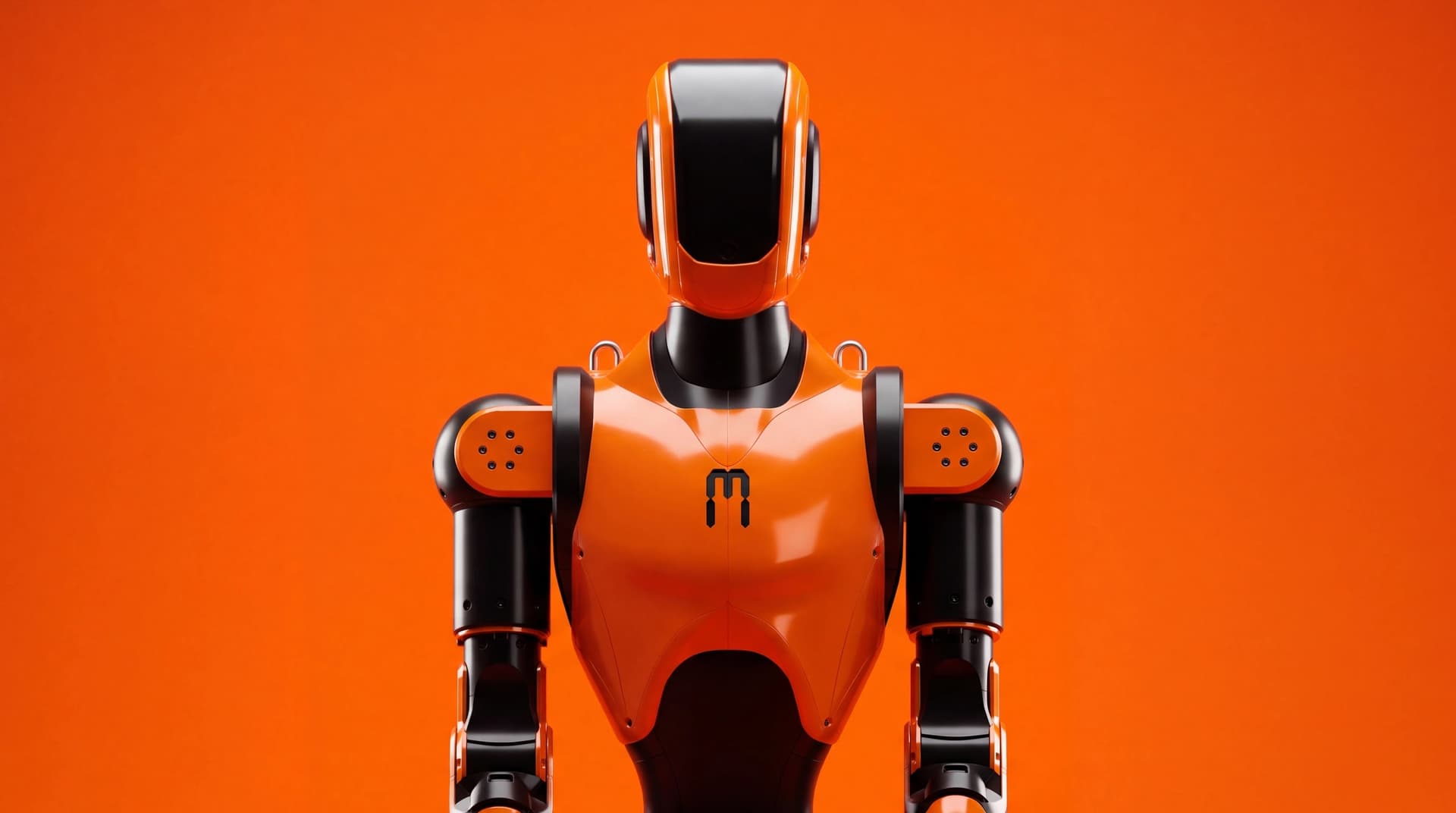
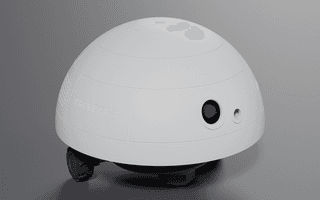
Disney's BDX droids walked into a conference in 2024, and a group of builders decided to make their own open version, complete with a 14-joint walking policy trained in simulation.
Build sheet
- Device page
- Disney BDX droid →
- Compute
- 2x Jetson Orin NX
- Legs
- 5 DoF per leg
- Training
- MJLab / PPO, Isaac Lab
- Chest board
- PuddleDuck (Teensy)
Can I build this?Expert · AI 2/5 · $3,000–6,000
- Difficulty
- Expert
- AI-buildability
- 2/5
- Time
- Several months
- Cost
- $3,000–6,000
AI can help with the RL training setup, motor bus firmware and control code, but the CNC parts, custom PCB, actuator integration and mechanical assembly are hands-on work.
Parts
Tools
CNC machine3D printersoldering ironCAD software
Starter prompt
Based on "OpenBDX: a Disney-style duck droid you can build" on Afterware: https://afterware.xyz/p/openbdx-a-disney-style-duck-droid-you-can-build
You are helping me build a small bipedal robot with a Jetson Orin NX running ROS 2 and Unitree-style motors on RS485 buses. Write a MuJoCo simulation with a 14-joint humanoid model, then train a PPO walking policy that tracks a reference gait with domain randomization on mass, friction and motor response. Export the policy to run at 50 Hz on the Jetson and send joint targets over the motor bus.
Estimates based on the original write-up. How AI-buildability is scored. Building with an AI assistant? Connect it to Afterware (free MCP server).
Story
The first time Jaime Machuca saw Disney's BDX droids was at Nvidia GTC in San Jose in 2024. What stuck was not the motion but the personality: within seconds, the crowd stopped seeing motors and saw characters. The Disney research paper became the map for an open build, and it grew from one person's replica attempt into a team project.
This is a real-world humanoid, not an astromech. Each leg has five degrees of freedom, the neck and head add four more, and two small servos drive the antennas. Unitree A1 and Go-M8010-6 actuators handle the legs, Dynamixel XH540 servos run the head, and two Nvidia Jetson Orin NX modules split the work between chest and head over Ethernet. A custom chest board called PuddleDuck uses a Teensy to bridge USB to six RS485 motor buses.
The hard part is walking. A person with a remote cannot puppeteer 14 joints in real time, so the team trains control policies in simulation with reinforcement learning, using animation reference motions, a curriculum of pushes and rough terrain, and domain randomization. The robot solves its own joint motion while keeping the gait's personality. If you want the full files and build guide, OpenBDX.org requires a free registration.
More like this

More like this
Hardwareby Shawn Hymel · Make: Videoby Kai Yang · X